
At a glance
Systeme.io suits solo creators, digital product sellers, and lean marketing teams who want an integrated checkout flow without paying separate subscriptions for checkout software, email automation, and hosting. Its native handling of checkout steps, order bumps, and one-click post-purchase upsells eliminates complex API webhooks, though advanced operators with high funnel volume or complex split-path logic may eventually bump into plan-based funnel and automation rule limits.
In this guide
Core Funnel Architecture: Step Types and Flow
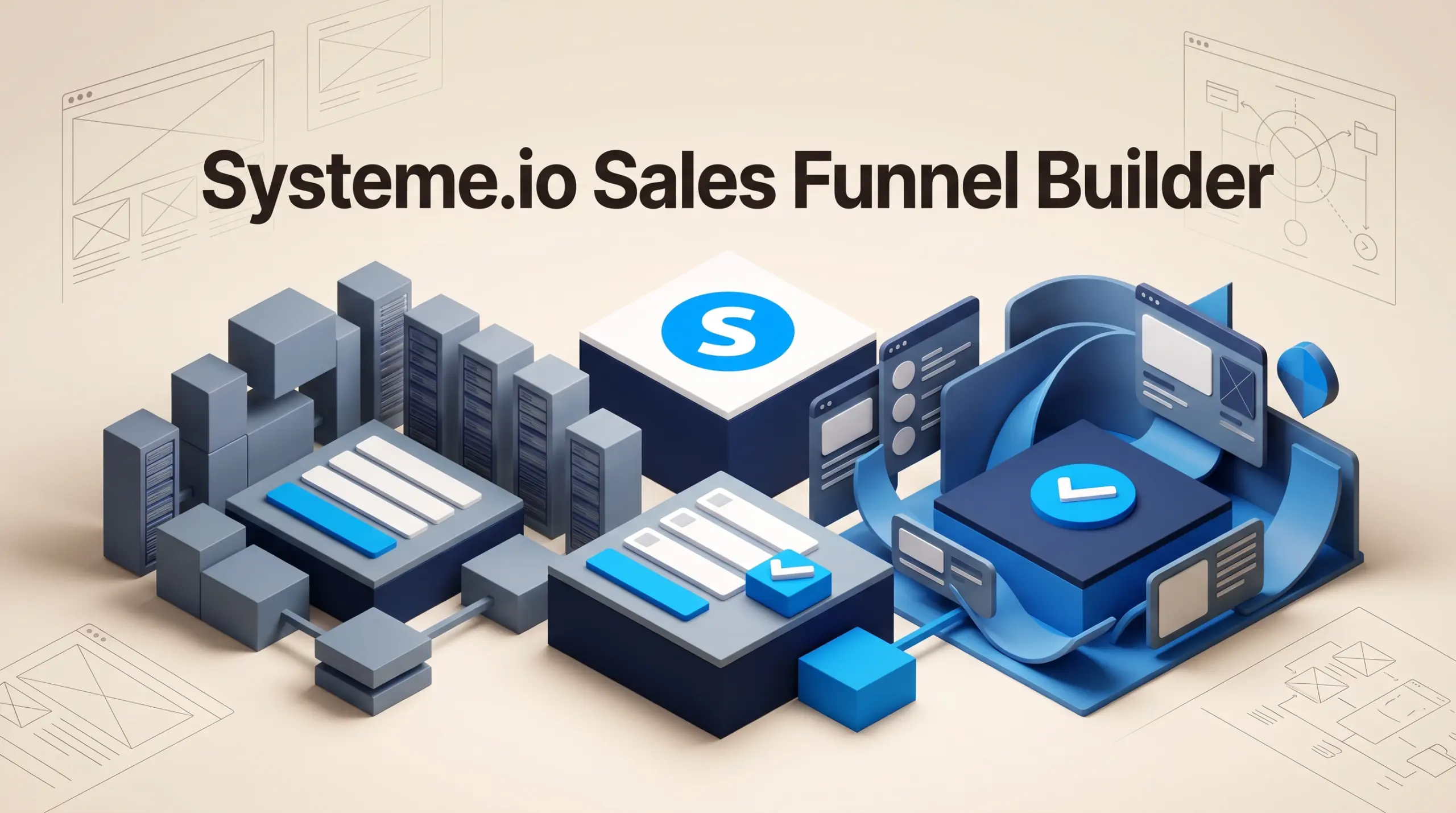
In the Systeme.io sales funnel builder, a funnel is structured as a linear sequence of pages known as funnel steps. Each step serves a distinct transactional or lead capture purpose, operating under a unified tracking and contact context:
- Squeeze and opt-in pages: Capture subscriber email addresses and assign tags or trigger automated sequences.
- Sales pages: Present offer details and direct prospects toward the order step.
- Order forms: Host checkout fields, collect buyer information, and execute payment processing.
- Thank-you pages: Deliver confirmation messages, order summaries, and initial fulfillment links.
Because steps are organized sequentially inside a single container, contacts flow predictably from initial lead generation to the final purchase confirmation without requiring third-party redirect scripts or external webhook routing.
Increasing Average Order Value: Order Bumps vs. 1-Click Upsells
Systeme.io provides two native mechanisms to increase average order value (AOV) directly inside the checkout funnel: order bumps and one-click upsells. While both introduce supplementary offers, they target distinct moments in the transaction cycle.
Pre-Purchase Order Bumps
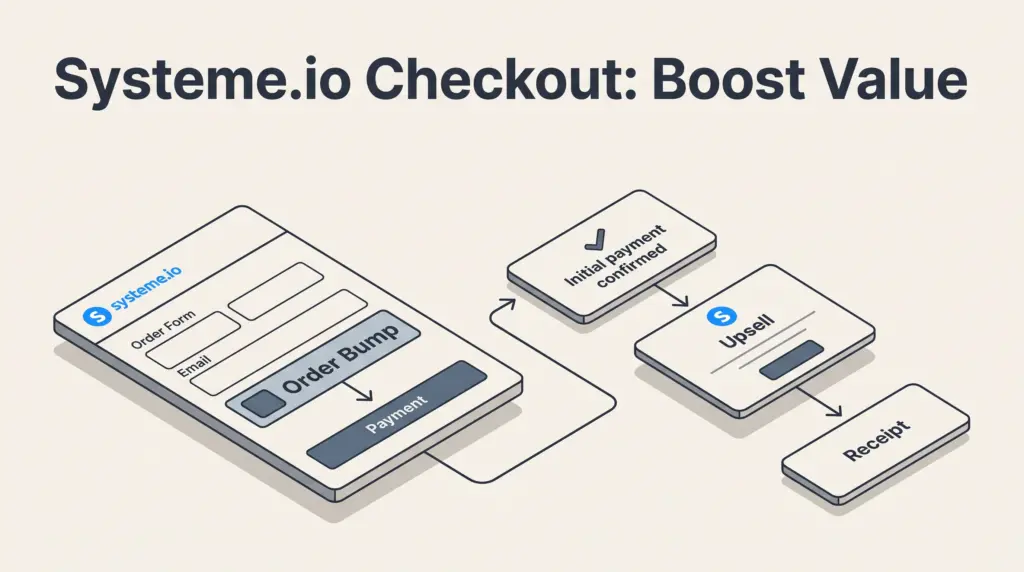
An order bump appears directly on the main checkout page before the buyer submits their payment details. It is presented as an optional checkbox that dynamically updates the total purchase price. This mechanism works best for low-friction, complementary add-ons such as workbooks, resource templates, or expedited fulfillment.
Post-Purchase One-Click Upsells
A one-click upsell occurs immediately after the initial checkout succeeds but before the final confirmation page renders. Because the customer’s payment token is securely stored during the initial transaction, the buyer can accept the additional purchase by clicking a confirmation button without re-entering credit card details. Systeme.io also supports downsells, presenting an alternative offer if the initial upsell is declined.
| Feature | Order Bump | 1-Click Upsell / Downsell |
|---|---|---|
| Placement | On the checkout order form | Dedicated intermediate step after checkout |
| Payment Action | Bundled into initial checkout submission | Single click using stored payment authorization |
| Ideal Offer Type | Low-ticket templates, checklists, audio editions | Higher-tier coaching, course upgrades, software access |
| Customer Friction | Zero friction; simple checkbox toggle | Low friction; requires page review but no re-billing entry |
Payment Processing and Platform Fees
Systeme.io does not levy proprietary platform transaction fees on sales across any tier, including its entry-level options. However, standard processing fees charged by integrated payment gateways still apply.
Documented native payment processor integrations include:
- Global gateways: Stripe, PayPal, and Apple Pay.
- Regional processors: Razorpay, Flutterwave, Mercado Pago, and Xendit.
- Offline options: Cash on delivery.
When selecting payment gateways, ensure the processor supports tokenized recurring billing if your sales funnel includes one-click upsells or recurring subscription offers.
Funnel Limits Across Subscription Tiers
Choosing the correct subscription depends heavily on how many distinct marketing funnels and automation triggers your business runs. For complete pricing tier breakdowns and contact allowances, consult our Systeme.io pricing guide.
- Free Plan: Includes up to 3 sales funnels, 15 funnel steps, 1 order bump, 1 upsell, 1 custom domain, and 1 automation rule.
- Startup Plan ($17/month): Expands limits to 10 sales funnels, 50 funnel steps, 10 order bumps, 10 upsells, and 10 automation rules. For details on upgrading, see our Systeme.io Free vs. Startup comparison.
- Webinar Plan ($47/month): Provides 50 sales funnels, 300 funnel steps, 100 order bumps, 100 upsells, and introduces automated evergreen webinars. Read more in our Webinar vs. Unlimited plan analysis.
- Unlimited Plan ($97/month): Removes all caps on sales funnels, funnel steps, upsells, order bumps, contacts, and automation rules.
Documented Limitations
While the funnel builder handles common ecommerce flows cleanly, teams should account for several platform constraints:
- Rule-Based Automation Caps: On lower tiers, automation rules are strictly capped (1 on Free, 10 on Startup). If a complex funnel requires separate tags for the main offer, order bump, and upsell, you can quickly exhaust available rule slots.
- Linear Pathing: Funnels are primarily designed around linear step progressions. Sophisticated multi-variant conditional routing often requires multiple funnels linked via email sequences rather than dynamic canvas branches.
- A/B Testing Limits: Split testing capabilities are tied to overall plan tiers, meaning free accounts have restricted split-testing capacity.
Worked Decision Example: Digital Publisher Launch
To evaluate tier requirements, consider an independent publisher launching an educational digital bundle under standard assumptions:
- Core Offer: An ebook sold at $27 via an order form step.
- Order Bump: A $9 supplementary audio version checked at checkout.
- Upsell Step: A $97 video workshop offered immediately after checkout.
- Automation Needs: 3 distinct tags (Buyer: Core, Buyer: Audio, Buyer: Workshop) triggered upon purchase.
Outcome: The funnel requires 3 steps (Sales/Order, Upsell, Thank-You), 1 bump, and 1 upsell. While the Free tier permits 3 funnels and 15 steps, its ceiling of 1 automation rule prevents tagging the bump, upsell, and core product separately. Therefore, the business must select at least the Startup plan at $17/month to execute this automated tagging workflow properly.
Who Each Setup Suits
- Free Plan Funnels: Best for beginners testing a single product or lead magnet with a simple checkout page and basic order confirmation.
- Startup Plan ($17/month): Ideal for solo entrepreneurs running a handful of active offers that incorporate pre-purchase bumps, post-purchase upsells, and segmented buyer tagging.
- Webinar and Unlimited Plans ($47–$97/month): Necessary for agency sub-accounts, high-volume digital creators, or operators running continuous evergreen launch funnels.
Next Steps
Review your product catalog to identify natural pairings for order bumps and post-purchase upsells. Map out the tags and fulfillment actions needed for each transaction component, confirm gateway compatibility with your target currencies, and begin on the Free plan to draft your funnel sequence before activating paid automation tiers.
Sources and further reading
Research checked 2026-10-16. Product details can change.