

At a glance
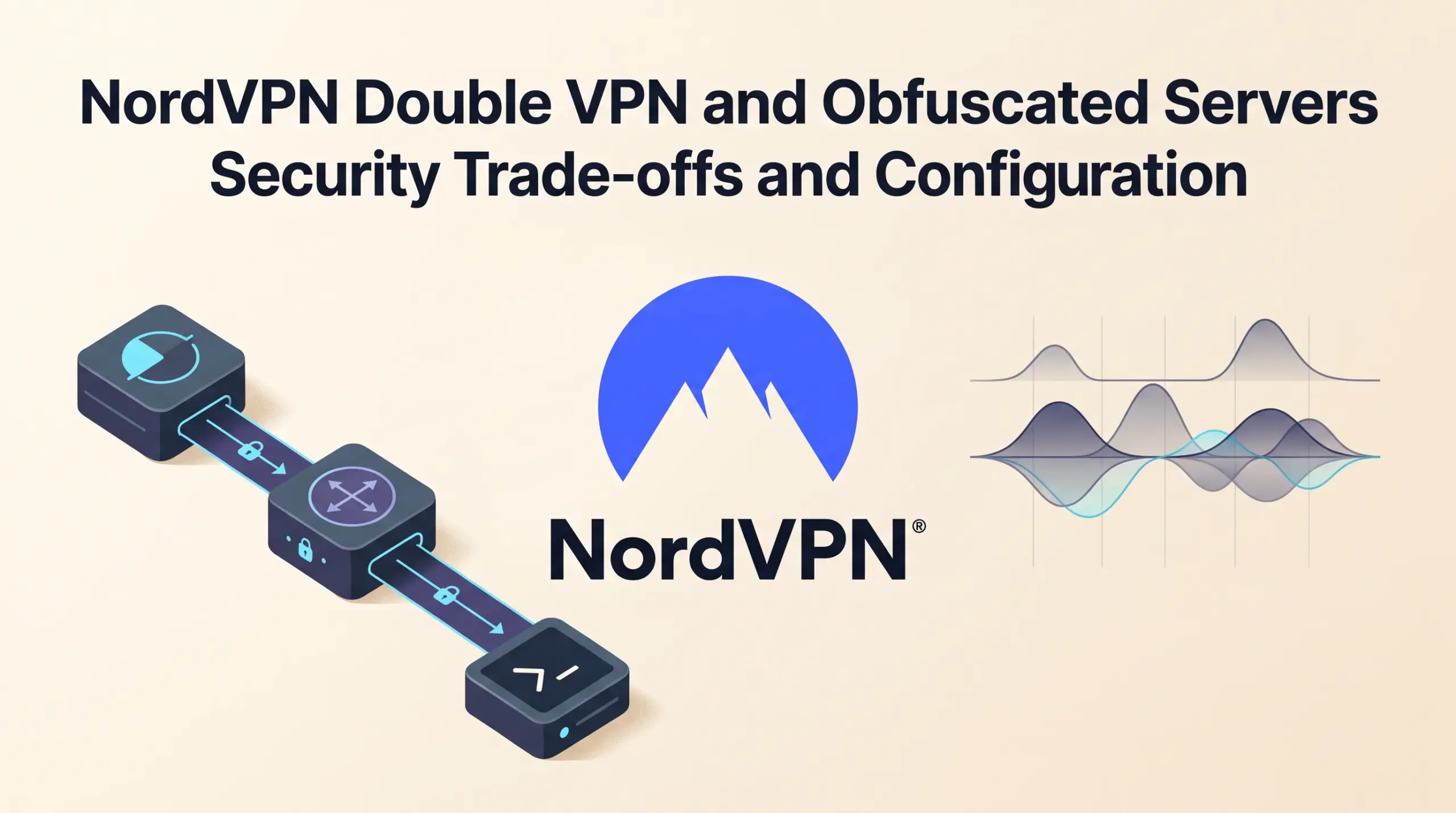
Double VPN adds a second VPN server to your connection. Obfuscated servers disguise VPN traffic to help it pass through networks that block VPNs. Choose according to the problem you need to solve. Double VPN is an extra routing and encryption option; obfuscation addresses connection restrictions. Neither is automatically the best choice for everyday browsing.
In this guide
Double VPN vs. obfuscated servers at a glance
| Question | Double VPN | Obfuscated servers |
|---|---|---|
| What changes? | Traffic travels through two VPN servers. | The connection disguises recognizable VPN traffic. |
| What problem does it address? | A need for an additional VPN hop and encryption layer. | A network that restricts ordinary VPN connections. |
| What is the main trade-off? | The additional server can slow the connection. | Connection options depend on the current app and supported protocol. |
| Which protocol detail matters? | If the option is missing, NordVPN suggests checking OpenVPN TCP or UDP. | NordVPN now documents a move from OpenVPN-based obfuscation to NordWhisper. |
These are different server categories, not two names for the same feature. NordVPN explains their purposes in its server-category guide.
When Double VPN makes sense
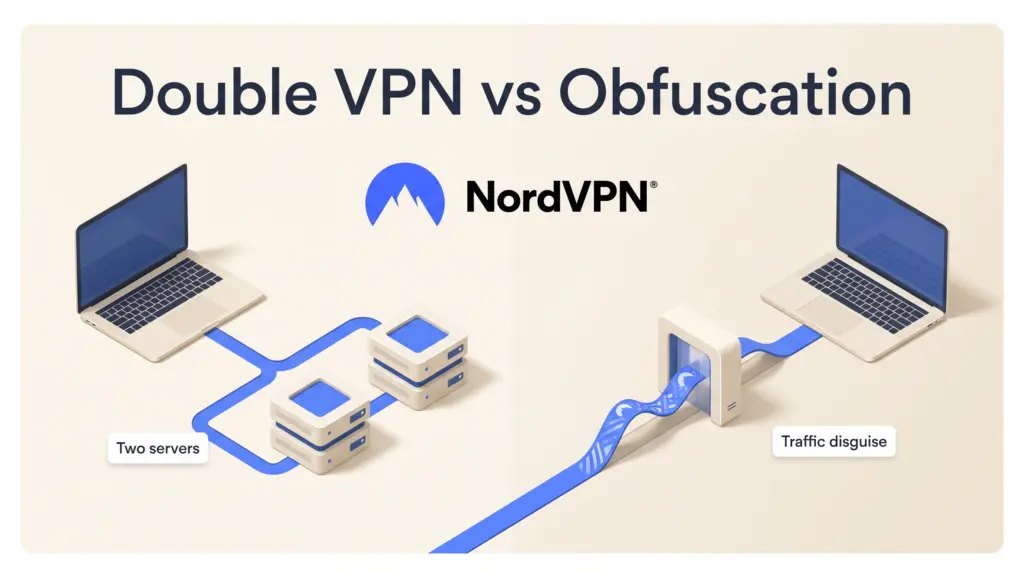
Double VPN sends traffic through a pair of VPN servers rather than a single server. The destination sees the exit server’s IP address. NordVPN describes this as an additional privacy and encryption option for situations where an extra hop is useful.
That extra route also takes work. NordVPN warns that Double VPN can reduce connection speed and is often unnecessary for ordinary browsing. It does not turn a connection into complete anonymity. Read the provider’s Double VPN explanation before choosing it simply because the name sounds more secure.
When obfuscated servers make sense
Obfuscation addresses a different obstacle: a network may recognize and block VPN traffic even though it cannot read the encrypted contents. Obfuscated servers make that traffic resemble ordinary web traffic so the VPN has a better chance of connecting through those restrictions.
This is not the same as becoming invisible to every website. NordVPN notes that services can still recognize a VPN server’s IP address. Its obfuscated-server guide explains both the purpose and this limitation.
The protocol change that older setup guides can miss
Older instructions describe obfuscated servers as an OpenVPN TCP/UDP feature. NordVPN’s current obfuscated-server upgrade notice says the category is moving to NordWhisper. It also says the upgraded category cannot be used through the OpenVPN manual connection method.
Check the instructions for your current app and platform instead of following an old protocol checklist. Do not assume the protocol used by one specialty server category also applies to the other. For Double VPN, the server-category documentation separately suggests checking OpenVPN TCP or UDP when the option is missing.
Which option should you choose?
- Everyday browsing or ordinary public Wi-Fi: start with a standard VPN connection. An extra server is not required just because you work remotely.
- A connection that needs an additional VPN hop: consider Double VPN, allowing for the possible speed reduction.
- A network that blocks ordinary VPN connections: check the current obfuscated-server and NordWhisper instructions for your device.
For example, someone whose VPN already works on a hotel network has a different problem from someone whose VPN cannot connect there at all. This is a decision example, not a measured comparison of connection speeds.
Neither feature changes your subscription’s device allowance or creates a team account. See our NordVPN device-limit guide and NordVPN plans and billing guide for those separate decisions.
Sources and further reading
Research checked 2026-10-30. Product details can change.